Welcome to the second article in our series on speculative bioenergy design. In our previous piece, we explored the taboos surrounding flatulence and why turning it into an energy source might be worth considering. Now, we’ll dive deeper, focusing on how gas from human flatulence could actually be captured and converted into electricity — without relying on unrealistic mini-turbines. Instead, we’ll look at microbial fuel cells and chemical conversion methods, both of which have real-world parallels in existing research.
[Speculative Design Fart Reactor](https://medium.com/@diyaz.yakubov/speculative-design-fart-reactor-35c1d7b6ef5b)
1.From Taboo to Technology : Why farts might be worth harnessing.
2.Inside the Fart Reactor : A look at the hypothetical mechanics.👈
3.Breaking the Silence : Social and cultural impacts of body-powered devices.
4.Beyond Farts : Other human-based bioenergy innovations.
5.Design Challenges : Comfort, efficiency, and privacy concerns.
6.Ethics and Ownership : Who controls the data tied to our bodily by-products?
7.Speculative Futures : Where human-powered tech could lead us next.
Capturing the Gas
Sealed Intake and Odor Control
- Tight Seal : A specialized undergarment or wearable device would form a snug fit around the body, directing expelled gas into a small collection chamber.
- Odor Filtration : Incorporating a carbon filter or chemical scrubber can neutralize smells. Maintaining wearer comfort and hygiene is paramount for practical use.
Why This Matters
Human flatulence isn’t high in volume or pressure, so capturing every small emission is crucial. A tight seal and efficient odor control ensure minimal leakage while keeping the device discreet.
 Concept of a Fart Reactor wearable device
Converting Gas to Electricity
Since the pressure and volume of human flatulence are quite low, traditional mechanical methods (like spinning turbines) are largely impractical. Instead, we look to the following well-researched avenues:
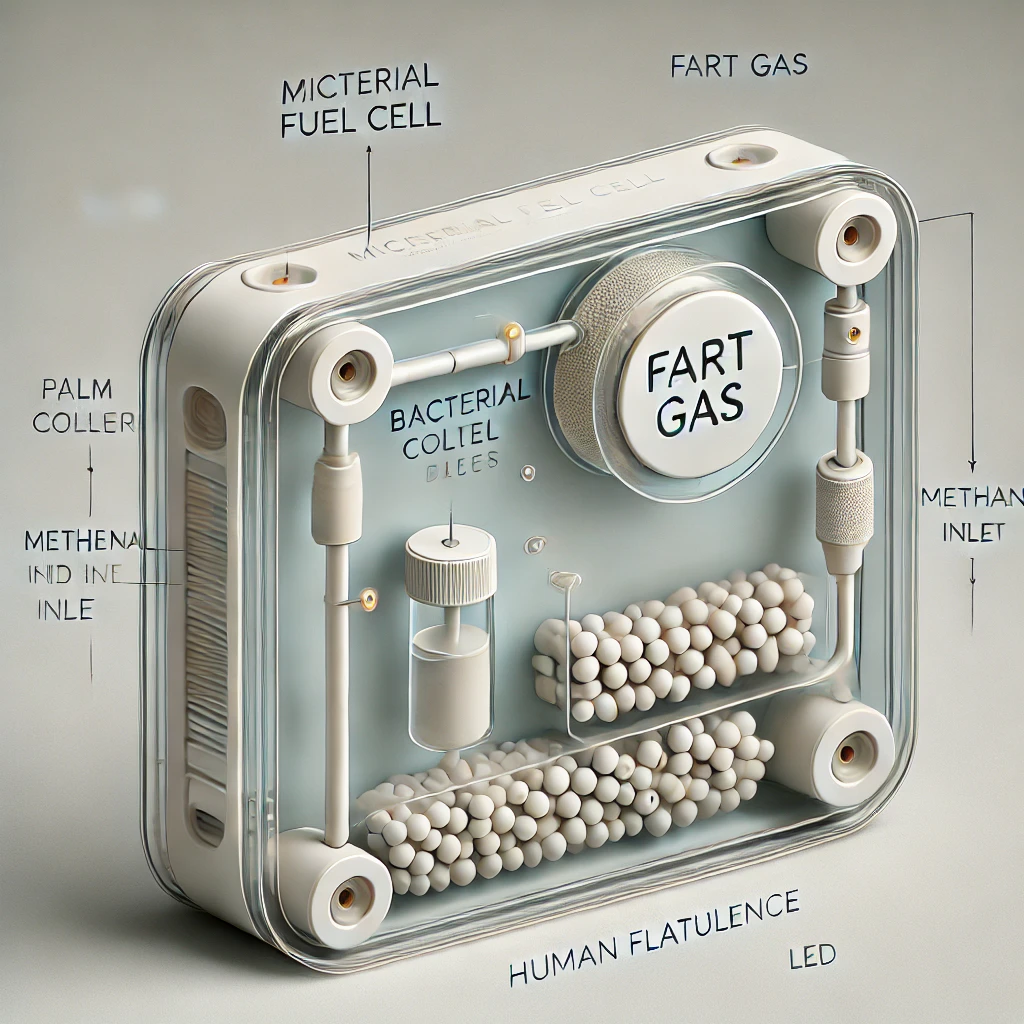
A. Microbial Fuel Cells (MFCs)
How They Work
- Certain bacteria can process organic compounds — including methane or hydrogen sulfide — within a sealed chamber (the “anode”).
- As these microbes break down the gas, electrons are released and travel through an external circuit to the cathode, generating a small but steady flow of electricity.
Pros
- Proven in Lab Settings : Urine-powered MFCs already exist (Ieropoulos et al.). Adapting them for methane-based feedstocks is scientifically plausible. [1]
- Continuous Operation : As long as the bacteria remain active and there’s gas to process, power can be generated.
Cons
- Environmental Control : Bacteria require optimal temperature, pH, and nutrients to thrive.
- Varying Gas Composition : Individual diets can alter the amount and type of gas produced, affecting MFC efficiency.
B. Chemical or Catalytic Conversion
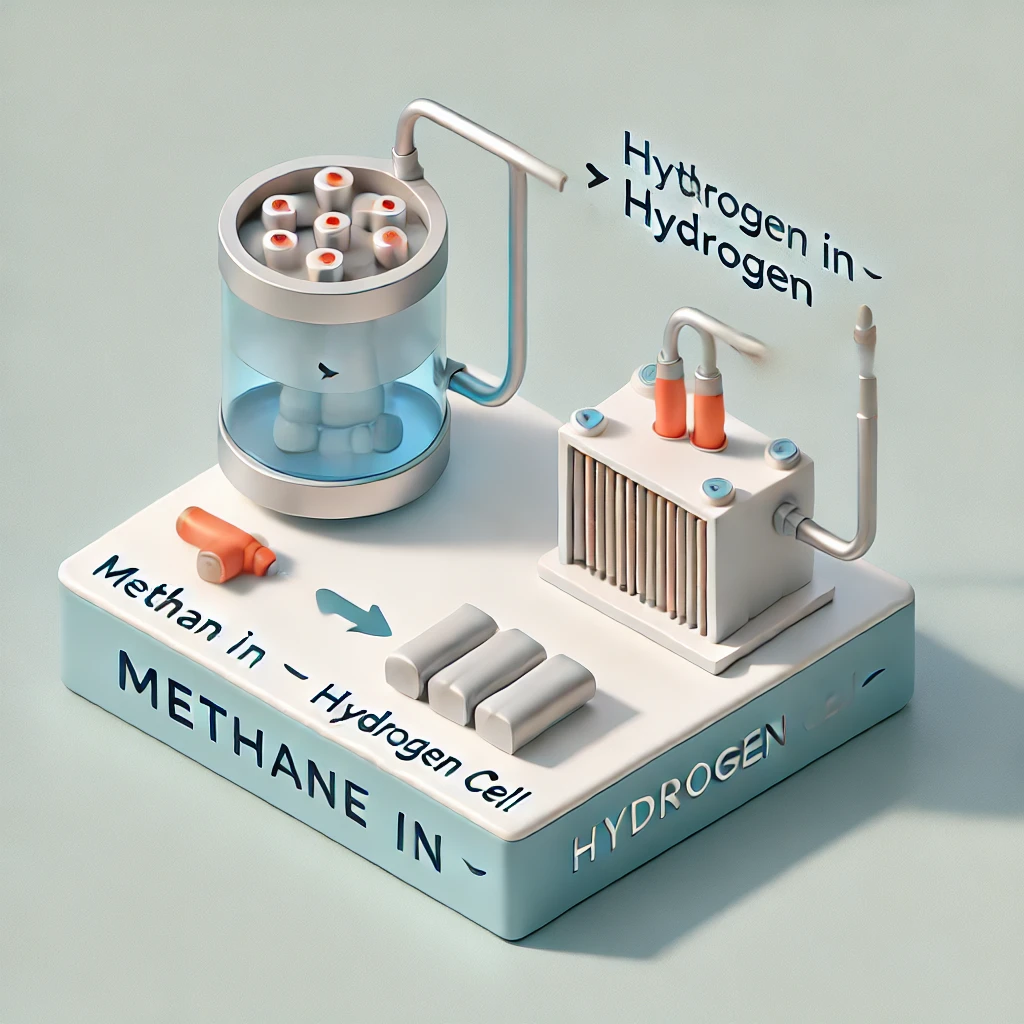
Basic Principle
- Methane can be split or partially oxidized using metal catalysts (e.g., nickel, palladium) to produce hydrogen or directly generate electrons in an electrochemical cell.
- Once hydrogen is formed, a mini fuel cell can convert it into electricity.
Pros
- No Live Organisms : Avoids issues with microbial health or colony maintenance.
- Potentially High Efficiency : Well-established processes at industrial scales, though downsizing is challenging.
Cons
- Engineering Complexity : Reducing large-scale chemical reactors to a wearable format is a major technical hurdle.
- Catalyst Sensitivity : Impurities (such as sulfur compounds in farts) can degrade some catalysts quickly.
Storing and Utilizing the Captured Energy
Even the most efficient conversion will generate small amounts of electricity per emission. This trickle of power can still be useful for:
Micro-Supercapacitors or Mini Batteries
- Quickly store short bursts of electricity from each gas capture event.
- Smooth out inconsistent power generation.
Wearable or IoT Devices
- Power health sensors, LED indicators, or basic Bluetooth connectivity.
- Alleviate some reliance on traditional batteries for ultra-low-power applications.
Realism Check: Is This Feasible?
- Gas Volume : Human flatulence contains some methane, but the total quantity is limited. A fart reactor wouldn’t replace mainstream energy sources — it’s more of a curiosity that underscores how biology can power small electronics.
- Design & Comfort : A device worn daily must be comfortable, discreet, and safe. Filters and collection chambers must be low-profile and easy to maintain.
- Efficiency vs. Cost : Achieving meaningful energy generation may require higher-cost materials or more complex engineering than current consumer wearables.
Nonetheless, exploring these pathways — microbial and chemical conversion — sparks broader questions about how humans might harness any and all forms of waste in a resource-scarce future. Even if a personal fart reactor remains niche or purely conceptual, the underlying technologies have real implications for biogas utilization[2], micro-scale fuel cells, and body-powered innovations.
Comments