 Some of my drawings
In December, I decided to take up drawing as a hobby. I enrolled in a few basic online courses and started sketching. One evening, my daughter saw me drawing and said, ‘I want to try that too!’ And that’s how we started having 30–40 minute evening drawing sessions.
A few months ago, during one of those sessions, my daughter sat down with a drawing pad, determined to create her best masterpiece. She picked up her pencil, drew a few lines, and then sighed in frustration. ‘It’s ugly,’ she said, crumpling the paper and tossing it aside. ‘I can’t draw!’
I picked up the paper, smoothed it out in front of her, saying, ‘You know, even great artists had to start somewhere. You don’t have to get it perfect — you just have to keep going.’
I showed her how to approach drawing: First, you draw a light outline, without pushing the pencil hard. This establishes the scale and proportions. It’s still a draft, but it starts reflecting the composition, and at this point, you may decide what to correct, what to drop, or even discontinue. Then, you add main contours and shadows. It’s still a draft, but it starts reflecting the reality. Finally, you add finishing touches, but this process can go on forever — it’s up to the artist to decide when to stop, when the draft is not a draft anymore.
I am very proud of her. She started playing with shades, and her drawings are becoming more and more interesting. Indeed, children are more artistic than adults.
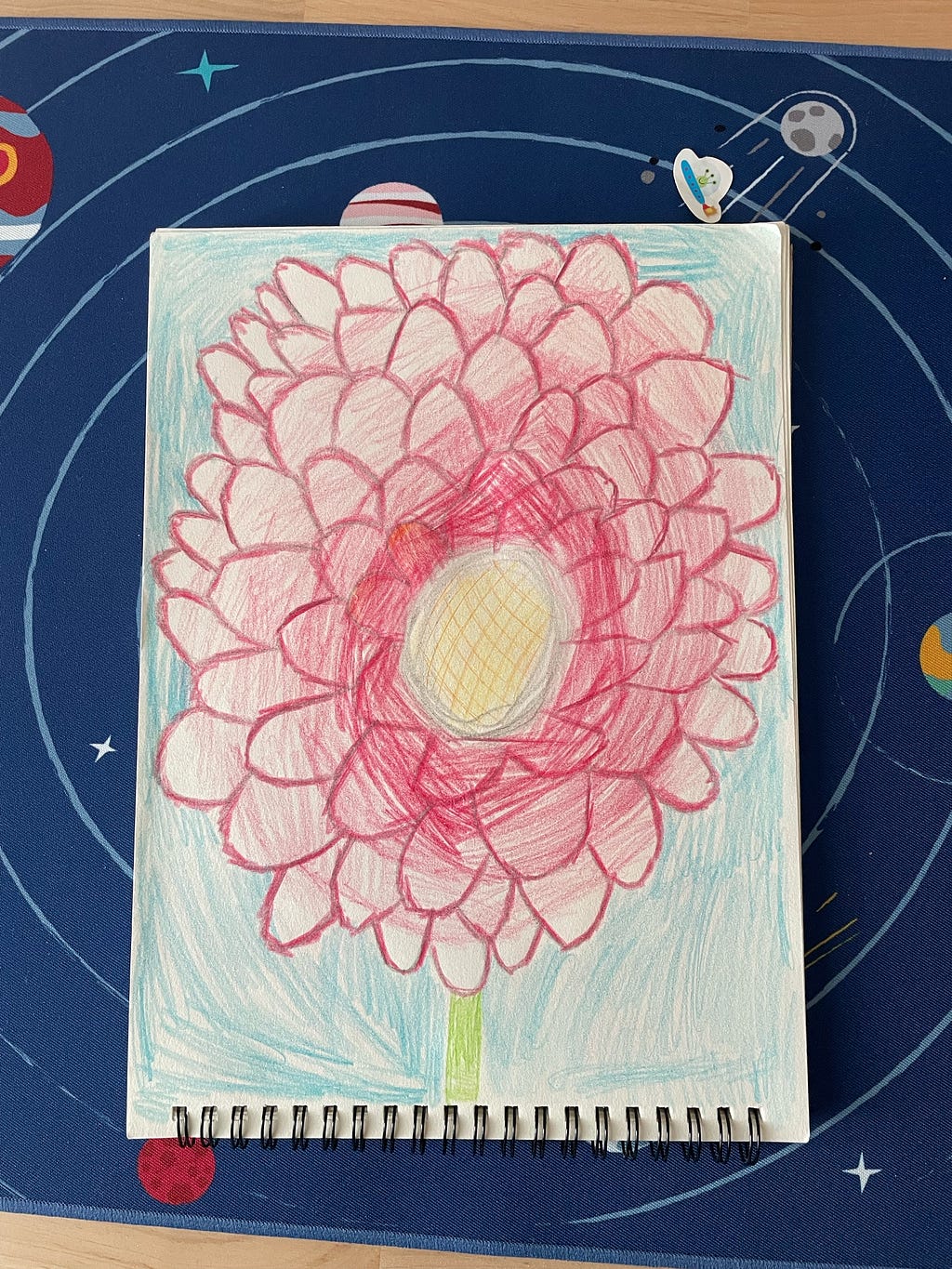 One of my daughter drawings
This process mirrors so much of what we do in life and work. We want to start perfect. We get frustrated when things don’t go the way we expect. But the truth is — whether it’s drawing, starting a business, or learning a new skill — Version 1.0 is never perfect.
A while back, two of my friends came to me with an idea. They had spotted a market gap — a real opportunity! We were excited. We brainstormed, planned, and worked late nights. But instead of shipping a minimal version of our product quickly , we spent months perfecting it — every feature, every detail. We were so focused on getting everything right before launching that we burned through time, energy, and most importantly, our budget.
Finally, after nearly a year of refining, I realized we needed to launch. We had accumulated enough features that we could finally show them to real users. My cofounders reluctantly agreed, still wanting the product to be perfect. But we pushed ahead. To our surprise, the first week went well — we sold a few subscriptions. But then, the real feedback started rolling in…
As users began using the product, we encountered bugs, data misalignments, and broken workflows. But the worst part was that many of our assumptions were wrong. If we had launched earlier, we could have tested our ideas, adjusted our approach, and saved ourselves a lot of wasted time and resources.
Looking back, the biggest lesson I learned was: fail early, adapt quickly. Perfection doesn’t happen overnight. Whether it’s drawing or launching a product, the key is to start and improve along the way. If we wait for perfection, we get stuck. But if we start, learn, and improve — we grow.
So, just like with drawing, the most important step is not to get it perfect but to keep going, keep learning, and keep iterating. Version 1.0 is never perfect… but it’s the only way to get to Version 2.0.
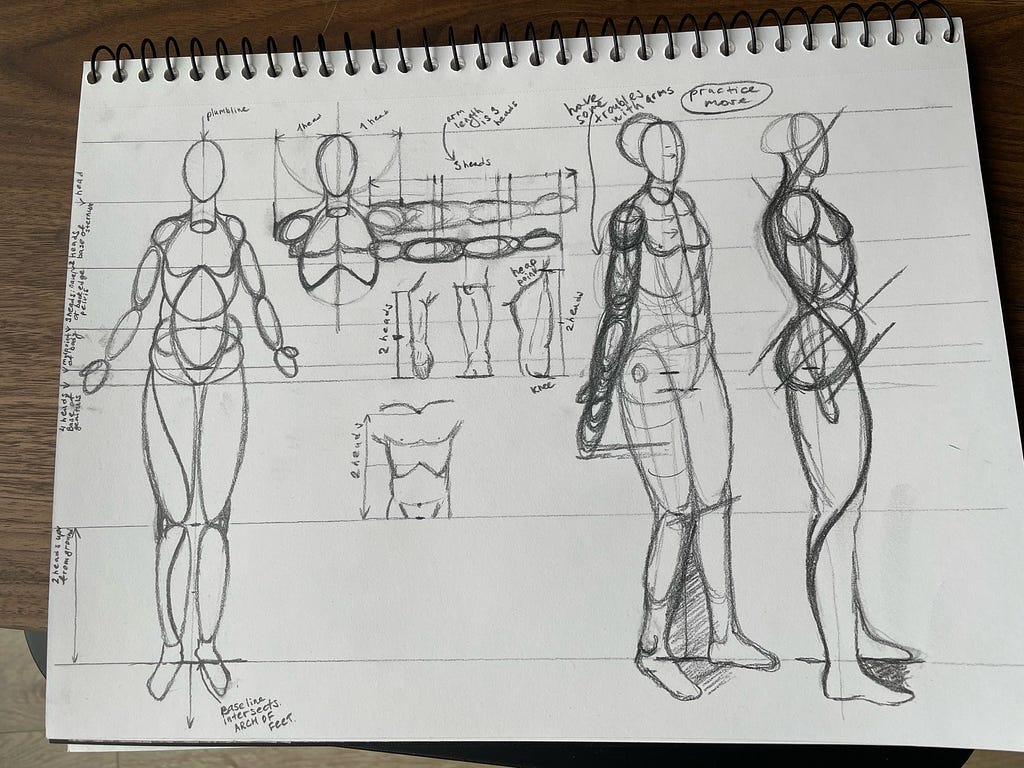 I miserably failed drawing a human body…The proportions are wrong. But this is Version 1.0
Comments